
▼
-
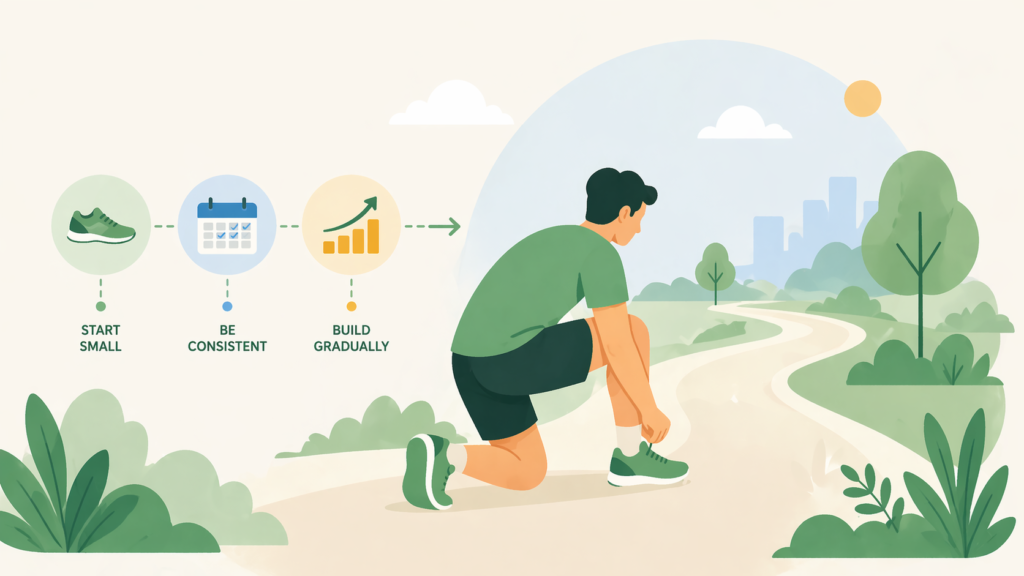
- You don’t need fitness to start running. You need the right approach
- The walk-run method is the easiest and most effective way to begin
- Slow down more than you think. Pace matters more than effort
- Expect the first 2 weeks to feel hard. That’s normal, not failure
- Consistency beats intensity. Show up 3–4 times a week
- Focus on completing runs, not performing in them
Starting to run sounds simple. Step out, move your legs, keep going.
In reality, it doesn’t feel like that at all.
If you’re trying to start running from zero, the first experience is usually the same. You run for 30 seconds, your breathing goes out of control, your legs feel heavy, and your mind starts telling you to stop. Most people take that as a sign that running isn’t for them.
It’s not.
The problem isn’t your fitness. It’s how you’re starting.
Most beginner guides either overwhelm you with tips or push you to run continuously from day one. That’s exactly why people quit early. What you actually need is a simple, structured way to begin running that builds your stamina without burning you out.
This guide is built for that.
Whether you’re completely inactive or just getting back into fitness, this beginner running guide will show you how to go from zero to consistent running using a system that works in real life. No complicated plans. No pressure to perform. Just a clear way to start, improve, and keep going.
By the end, you won’t just understand how to run. You’ll know how to start running in a way that actually sticks.
If You Can’t Run for 1 Minute, This Is For You
If you’re trying running from zero and can’t even last a minute, that’s normal.
You’re not behind. You’re just at the actual starting point.
Most beginners face the same things:
- Breathlessness within seconds
- Legs feeling heavy too quickly
- Awkward pace, not knowing how fast to go
- Stopping often and feeling like you failed
None of this means you’re unfit.
It simply means your body hasn’t adapted yet.
Running isn’t something you either “have” or “don’t.” It’s built, step by step. Once you start the right way, your breathing improves, your legs adjust, and those first 30 seconds turn into minutes.
Right now, you don’t need to run longer.
You just need to start correctly.
Before You Start Running, Read This Once
If you’re figuring out how to begin running, set this straight first.
It will not feel easy in the beginning.
You will experience:
- Discomfort within the first few minutes
- A strong urge to stop early
- Thoughts like “this isn’t for me”
None of this means you’re doing it wrong.
It means your body is adjusting.
Most people quit here because they think something is off. In reality, this phase is part of the process. Your lungs, legs, and mind are all catching up at the same time.
Expect it to feel hard.
That’s not failure. That’s the start.
The mind side is trainable, and the same habits that train your attention at work carry over to your runs.
A 4-Week Beginner Running Plan (From Zero to 20+ Minutes Running)
If you’re looking for a beginner running guide that actually works when you’re starting from zero, this is the one I wish I had.
Because the truth is, your body isn’t the biggest challenge in the beginning. Your mind is.
The first few runs feel uncomfortable, awkward, and honestly a bit frustrating. You’ll keep thinking, “How do people do this for 20–30 minutes straight?”
That’s exactly why this beginner running plan works. It doesn’t force you to run. It teaches your body how to adapt.
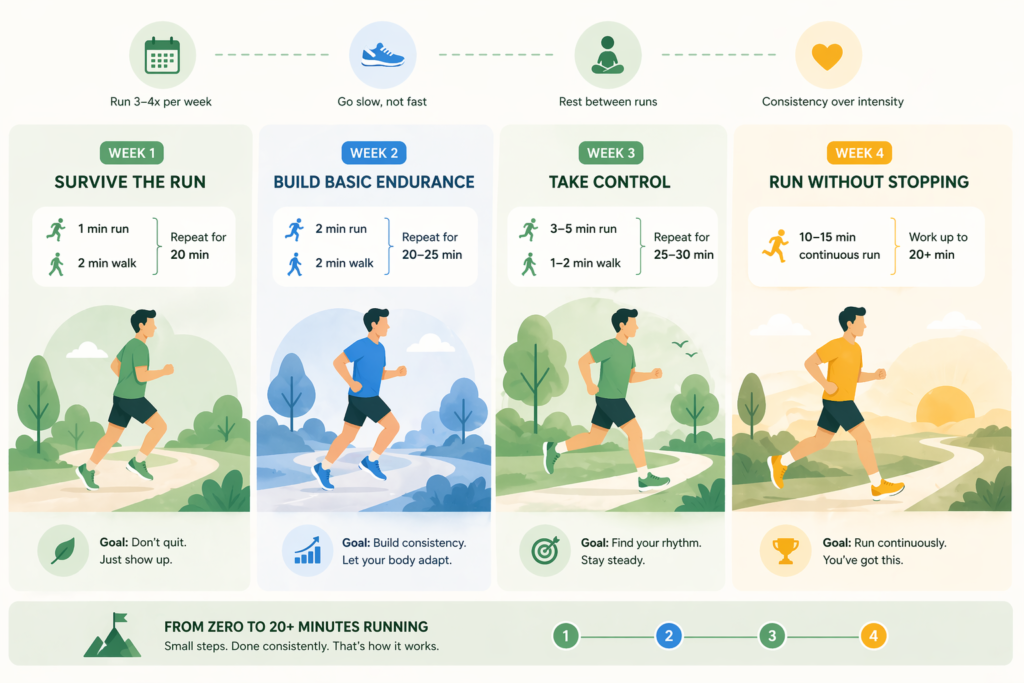
Run 3–4 times a week, keep at least one rest day in between, and don’t chase speed at any point. If anything, go slower than you think you should.
Week 1: Survive the Run
This week is not about improvement. It’s about not quitting.
When I started, even 60 seconds of running felt longer than it sounds. Your breathing spikes quickly, your legs feel tight, and your brain starts negotiating with you to stop.
That’s where most people lose.
Structure:
- 1 min run + 2 min walk
- Repeat for 20 minutes
What to focus on:
- Just complete the session
- Don’t try to “prove” anything
- Keep your running pace slow, almost uncomfortable in how slow it feels
What it actually feels like:
- First few runs feel chaotic
- Breathing is uneven
- You’ll keep checking the time
You might feel like you’re not doing enough because of the walking.
You are.
That’s exactly what allows you to come back for the next run instead of quitting after two sessions.
Week 2: Build Basic Endurance
This is where you’ll notice something small but important.
You’re still getting tired, but you’re not panicking anymore.
That shift matters. This is where endurance building actually starts.
Structure:
- 2 min run + 2 min walk
- Repeat for 20–25 minutes
What to focus on:
- Keep your pace controlled
- Resist the urge to speed up just because you feel slightly better
- Let your breathing settle into a rhythm
What it actually feels like:
- Running still feels hard, but not overwhelming
- Walk breaks feel more effective
- You recover faster between intervals
This is usually the point where people make a common running mistake.
They feel better and try to push harder.
Don’t.
Progress here comes from staying consistent, not pushing limits.
Week 3: Take Control
This is the week where things start to click.
You’re not thinking about every second anymore. You’re starting to feel a rhythm.
I remember this phase clearly. For the first time, running didn’t feel like something I had to survive. It felt like something I could manage.
Structure:
- 3–5 min run + 1–2 min walk
- Repeat for 25–30 minutes
What to focus on:
- Extend your running time gradually
- Keep your pace steady, not fast
- Stay relaxed, especially your shoulders and breathing
What it actually feels like:
- Breathing becomes more predictable
- You stop looking at the clock as often
- Walk breaks feel shorter than before
You’ll still get tired.
But now, instead of stopping because you can’t continue, you’re choosing when to pause.
That’s a big shift.
Week 4: Run Without Stopping
This is where you test everything you’ve built.
Not perfectly. Just honestly.
Your goal isn’t to run fast or impress yourself. It’s to run continuously, even if it’s slow.
Structure:
- Start with 10–15 minutes continuous running
- If needed, take short walk breaks
- Gradually push toward 20+ minutes total running
What to focus on:
- Slow down more than you think you should
- Keep your breathing under control
- Don’t stop suddenly, ease into it
What it actually feels like:
- More mental resistance than physical
- You’ll feel like stopping even when you can continue
- Pace becomes the deciding factor
This is where most beginners realize something important.
You were never “bad at running.”
You were just starting too fast before.
By the end of this week, you’re not struggling to start anymore. You’re thinking about how to improve.
And that’s the real transition.
From forcing yourself to run… to becoming someone who runs.
Why Most People Fail When They Start Running
Most people don’t quit running because they lack discipline.
They quit because they start the wrong way.
Here’s what usually goes wrong:
- They try to run continuously from day one
- They run too fast without realizing it
- They expect it to feel easy within the first few sessions
- They go out without any clear structure or plan
When it starts feeling hard, they assume something is wrong with them.
It isn’t.
Running feels difficult in the beginning for everyone. The difference is not motivation. It’s approach.
This is not a motivation problem. It’s a structure problem.
Also Read: How to Build Discipline That Actually Lasts (A System, Not Motivation)
The Only Method You Need to Start Running
If there’s one thing that makes the difference when you’re starting, it’s this.
The walk-run method.
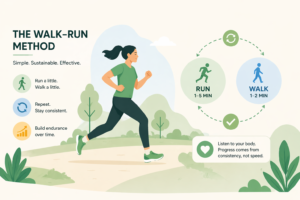
Most beginners try to run continuously from day one. That’s where things break. You get exhausted too quickly, your breathing goes out of control, and it stops feeling sustainable.
This method fixes that.
What Is the Walk-Run Method
It’s exactly what it sounds like.
You alternate between short running intervals and walking breaks.
Instead of forcing yourself to run non-stop, you give your body time to recover in between. That’s what allows you to keep going longer without burning out.
Simple. But it works.
Why It Works for Beginners
When you’re starting from zero, your body isn’t used to continuous effort.
This method helps you ease into it without overwhelming yourself.
- It reduces early burnout so you don’t quit after a few runs
- It helps in gradual endurance building without pushing too hard
- It removes the pressure to “perform” or run perfectly
You’re not trying to prove anything here. You’re just building capacity.
Your First Session (Keep It Simple)
Don’t overthink your first run.
Just follow this:
- Run for 1 minute
- Walk for 2 minutes
- Repeat for 20 minutes
That’s it.
It might feel too easy at times and too hard at others. Both are fine.
What matters is you finish the session and come back for the next one.
That’s how you start running the right way.
What Running Actually Feels Like (Week by Week Reality)
This is where most guides fall short.
They tell you what to do, but not what it will feel like. And when your experience doesn’t match your expectations, you assume something is wrong.
It’s not.
Here’s what it actually feels like, week by week:
| Week | What You’ll Feel | What It Means |
| Week 1 | Lungs burning, legs feel heavy, everything feels harder than expected |
Your body is not used to running yet. This is the adjustment phase, not a failure
|
| Week 2 | Breathing is still hard but slightly more controlled |
Early adaptation starts. Your system is learning to handle the effort
|
| Week 3 | You begin to find a rhythm, runs feel more manageable |
Your body and breathing are syncing. Confidence starts building
|
| Week 4 | You stop fearing the run, it feels doable |
Mental barrier breaks. Running starts feeling like something you can handle
|
How to Build Endurance Without Burning Out
This is where most beginners get it wrong.
They think getting better at running means pushing harder every time. Running faster, running longer, feeling exhausted after every session.
That approach works for a week. Then it breaks you.
Real endurance building is slower than you expect.
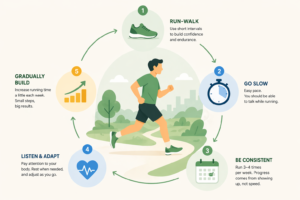
Here’s what actually works:
- Slow down more than you think
If it feels easy, you’re doing it right. If it feels hard too early, you’re going too fast - Run at a pace where you can barely talk
Not full conversation, but a few words without gasping. That’s your sweet spot - Consistency matters more than intensity: Three steady runs every week will beat one “all-out” run followed by burnout
- Recovery matters more than effort
Your body improves when it rests, not when it’s constantly pushed
When you slow things down, something interesting happens.
You last longer. Your breathing stays under control. And instead of dreading the next run, you’re ready for it.
That’s how endurance builds quietly, without forcing it.
Once running 15-20 minutes continuously feels normal, here’s how to extend that further, longer runs, breathing rhythm, and a plan to build past your current comfort zone.
Beginner Runner Tips That Actually Matter
Most beginner runner tips you’ll find are either too basic or too detailed to follow.
At this stage, you don’t need more information. You need a few things done right, consistently.
Focus on this:
- Don’t chase speed
Speed comes later. Right now, running slower will actually help you run longer - Fix your pace before distance
If your pace is off, adding distance will only make it harder. Get comfortable first - Rest days are part of progress
Skipping rest doesn’t make you disciplined. It increases your chances of quitting - Track consistency, not performance
Don’t worry about pace, distance, or time. Just track how many days you showed up
If you get these right, everything else improves on its own.
Most people look for advanced strategies too early. The real progress comes from doing the basics without breaking the routine.
Leave a Reply